The Invisible Landlords: Decoding the Franchise Empire
The Illusion of the Storefront
Every morning, millions of people walk into familiar storefronts, greeted by the same colors, the same smells, and the same predictable efficiency. From the golden arches in Tokyo to the green-and-white convenience stores in Chicago, these physical locations represent a comforting stability in a volatile global economy. To the casual observer, these are businesses that sell burgers, coffee, or gasoline. We perceive them as operational machines, turning raw inventory and labor into a finished product for a slim margin. However, the reality of these global monoliths is far more complex and strategically profound. Underneath the layer of consumer branding and daily transactions lies a massive, sophisticated infrastructure of property ownership and legal engineering. Many of the world’s most successful franchise systems are not, in their truest financial sense, food or retail companies at all. They are some of the largest and most powerful real estate investment trusts in history, operating under the clever disguise of a neighborhood diner.
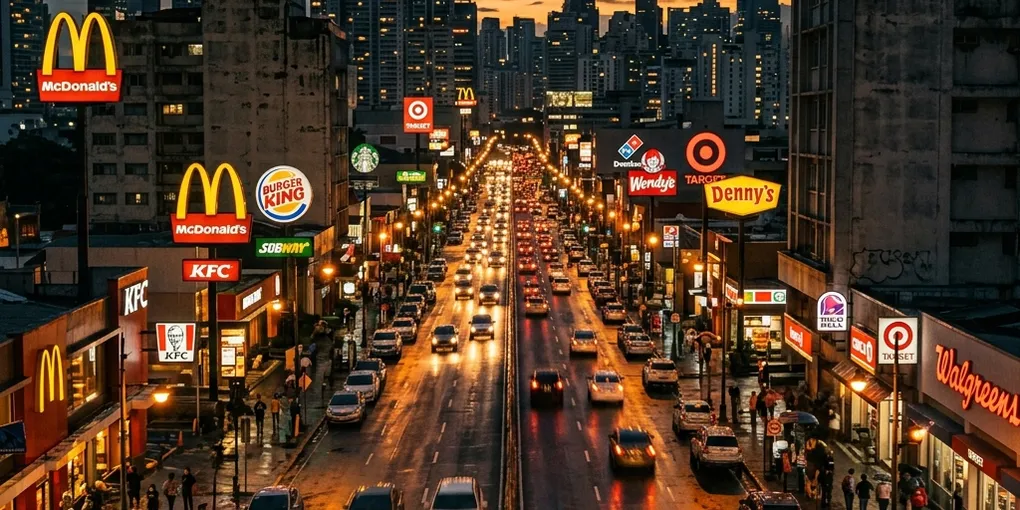
This structural hiddenness is a feature, not a bug, of modern capitalism. It allows a corporation to de-risk its balance sheet while maintaining absolute control over its brand essence. When you look at a bustling intersection in a modern city, you are not just looking at competing restaurants; you are looking at a high-stakes game of land acquisition and territorial dominance. The true engine of wealth in these systems does not reside in the kitchen or the cash register. Instead, it is found in the title deeds to the land beneath the building and the meticulously crafted lease agreements that bind local entrepreneurs to the corporate parent. This transition from being a simple operator to becoming an invisible landlord represents one of the most significant evolutions in business history, turning volatile operational income into a steady, nearly indestructible flow of rental revenue.
The Psychology of Standardized Space
Human beings possess a biological craving for patterns and predictability. In an unpredictable world, the reliability of a standardized franchise offers a form of psychological safety. This is why a traveler in a foreign city will often bypass a local, authentic eatery in favor of a global chain. They are not necessarily choosing the best food; they are choosing the path of least cognitive resistance. They know exactly what the experience will be, how much it will cost, and that the quality will be within a certain acceptable range. This psychological comfort is the primary product of the franchise system. The food is merely the delivery mechanism for that comfort.
By mastering the architecture of these spaces, franchise giants have created a form of Pavlovian conditioning on a global scale. The specific height of a sign, the temperature of the lighting, and the tactile feel of the furniture are all engineered to produce a specific internal state in the consumer. This consistency is what gives the real estate its value. A random corner in a suburb is just a piece of dirt. But a corner with a standardized building and a globally recognized logo becomes a high-yield asset. The corporation is not just owning land: it is owning the predictable behavior of the humans who pass by that land. This synthesis of behavioral psychology and property management is the foundation of the modern consumer empire.
The Genesis of Global Scaling
To understand how this paradigm shift occurred, we must look back to the mid-fiftieth decade of the twentieth century. Ray Kroc, a struggling salesman of multi-mixer machines, encountered a small, hyper-efficient burger stand in San Bernardino. He saw the future in their standardized processes, but his initial attempts to scale the concept were financially precarious. The original business model was built on a thin foundation of small royalties and the sale of equipment. Kroc was expanding the brand rapidly, but he was barely keeping the lights on at headquarters. He was trapped in the operational grind, where every increase in scale brought a corresponding increase in logistical complexity and financial risk.
In those early days, the friction of growth was nearly terminal. Kroc was selling franchises for a nominal fee, but the ongoing royalties were so low that they barely covered the costs of supervising the locations. The brothers who founded the original stand were content with their local success and had little interest in the global ambitions of their ambitious partner. Kroc found himself in a paradox: the more successful the brand became, the more debt he accumulated. He was building a massive network of businesses, yet he owned almost none of the underlying assets. He was an orchestrator without an anchor, a salesman who had built a kingdom on borrowed ground. The breakthrough did not come from a kitchen innovation or a marketing campaign: it came from a conversation with a brilliant financial mind named Harry Sonneborn.
The Sonneborn Revolution
Harry Sonneborn realized that as long as the corporation only collected a small percentage of food sales, it would always be vulnerable to the whims of the market and the inconsistencies of individual operators. He understood that the real value was not in the meat, but in the square footage. His radical proposition was to shift the fundamental nature of the company. Instead of just selling the right to use a name, the corporation would become the primary leaseholder or owner of the land where every restaurant sat. This led to the creation of the Franchise Realty Corporation, a separate entity specifically designed to manage land acquisition.
By controlling the physical site, the company gained ultimate leverage. If a franchisee failed to follow the standards, they weren’t just losing a license: they were losing their lease. More importantly, the corporation could charge a marked-up rent that provided a stable, predictable income stream that far exceeded the potential from food royalties alone. This was the moment the burger business became a real estate empire. It allowed Kroc to use the property assets as collateral for massive loans, which in turn funded the acquisition of more land. It was a self-reinforcing engine of capital accumulation that eventually allowed the corporation to buy out the original founders and establish total dominance over the system.
The Anatomy of a Triple Net Lease
The legal instrument that powers this empire is often known as the triple net lease. In this arrangement, the tenant (the franchisee) is responsible for all the costs associated with the property: the taxes, the insurance, and the maintenance. The landlord (the corporation) receives a “net” payment that is almost pure profit. For the parent company, this is the ultimate form of asset-light growth. They use their credit to buy the land, and then they have a motivated entrepreneur who not only pays for the privilege of operating there but also handles the physical upkeep of the asset.
This structure shifts the operational risk entirely onto the franchisee. If utility costs spike or property taxes rise, the corporation is shielded. If a local competitor opens across the street and sales dip, the franchisee still owes the base rent. The corporation has effectively offloaded the messiness of being a business owner while retaining the pristine stability of being a landlord. This is why, in the financial filings of these companies, you will often see that the real estate division generates a significantly higher margin than the supply chain or the food service divisions. They have engineered a system where the risk is decentralized and the reward is centralized.
The Strategic Corner: A Geographic War
The acquisition of land is not a random process: it is a high-level geopolitical struggle for urban dominance. Franchise giants employ teams of data scientists and geographers who analyze satellite imagery, traffic patterns, and demographic shifts to identify the most valuable corners in a city. They are looking for “intercept” locations: places where consumers are already moving from point A to point B. A prime location is one that requires zero effort for the consumer to visit. It is simply in their way.
Once a strategic corner is identified, the corporation is willing to pay a premium to secure it. They know that once they have established a presence on that corner, they have effectively locked out their competitors for decades. In many cases, the value of the dirt is so high that the actual building on top of it is secondary. If the restaurant fails, the corporation still owns a high-traffic corner that can be repurposed or leased to another tenant. This geographic moating is one of the most underrated aspects of corporate strategy. It is a form of physical monopoly that is much harder to disrupt than a digital one.
Cultural Engineering at Chick-fil-A
While the real estate-heavy model is a dominant force, other franchise giants have developed alternative structures that prioritize different forms of leverage. Consider the unique model of Chick-fil-A, which operates on a principle of radical selectivity. Unlike many competitors who require millions of dollars in liquid assets from a potential franchisee, this company keeps the initial financial barrier remarkably low. However, they only accept a tiny fraction of applicants, focusing on character, community involvement, and local presence. In this model, the corporation retains ownership of almost everything: the land, the building, and the equipment.
The local operator is essentially a high-level partner who shares in the profits of a single location, rather than an independent business owner who can scale to dozens of units. This “operator-first” approach ensures a level of cultural consistency and service quality that is the envy of the industry. By removing the financial barrier, the company can select for pure talent and dedication, rather than just capital. It is a form of human capital management disguised as a franchise system. The long-term result is a higher per-store sales volume than almost any other chain, which in turn elevates the value of the underlying real estate. They have proven that by investing in the person, you can maximize the return on the property.
The Global Licensee: Scaling the Unscalable
In international markets, the real estate strategy must often adapt to local laws and customs. In many countries, foreign ownership of land is restricted or prohibited. To navigate this, companies like 7-Eleven and Starbucks have mastered the art of the area license or joint venture. They partner with massive local conglomerates who already understand the nuances of local property development. In exchange for an upfront fee and ongoing royalties, the local partner takes on the burden of land acquisition and store construction.
This licensing model allowed these brands to scale globally at a pace that would have been impossible if they had tried to buy every location themselves. It is an asset-light strategy that prioritizes global reach and brand ubiquity. However, even in these agreements, the parent company often retains strict controls over the site selection process. They may not own the land, but they own the “veto power” over where the logo is placed. This ensures that the brand remains associated with high-value environments, protecting the intellectual property even when the physical property is out of their direct control.
The Economics of Control: Standards as Leverage
One of the most profound benefits of the landlord-tenant relationship is the absolute control it grants over operational standards. In a traditional licensing agreement, a company can only punish a bad operator by revoking their license: a process that is often legally complex and slow. But when the parent company is also the landlord, they have a much more powerful weapon: eviction. The threat of losing a prime business location is a massive motivator for franchisees to follow every detail of the operational manual.
This control extends to every aspect of the physical space. The corporation can mandate expensive renovations or technological upgrades, and the franchisee has little choice but to comply if they want to keep their lease. This ensures that the entire system remains modern and competitive, preventing the brand from becoming stale. The property is the “hook” that keeps the entrepreneurs aligned with the long-term vision of the corporation. It is a form of governance that uses physical assets to enforce digital and operational consistency.
The Inflation Hedge: Real Estate as a Monetary Shield
In the current economic climate of 2025 and 2026, the wisdom of the real estate-centric franchise model has become even more apparent. As inflation fluctuates and consumer spending patterns shift, the companies with significant land holdings possess a natural hedge. While the cost of ingredients and labor may rise, the value of the underlying real estate generally keeps pace with inflation. Land is a “hard asset” that retains its fundamental utility regardless of the value of the currency.
Furthermore, the land itself can be used as collateral for massive, low-interest debt. Large corporations can borrow against their property portfolios to finance further expansion or invest in technological upgrades that smaller, un-anchored competitors cannot afford. They are not just selling products: they are managing a diversified portfolio of prime retail locations. This financial flexibility allows them to weather economic storms that would bankrupt an operator who is forced to pay market-rate rent to a third-party landlord. They are their own safety net.
Logistics and the Future of the Hub
The rise of digital ordering and delivery has prompted a radical rethinking of the physical storefront. The invisible landlords of the next decade will not just be looking for the best traffic counts: they will be looking for locations that maximize their access to logistical flow. We are seeing the transformation of the restaurant from a dining hall into a multi-purpose logistical node. A single location might now serve walk-in customers, provide a pick-up point for mobile orders, and act as a micro-distribution center for local delivery drivers.
This shift makes the control of physical space even more critical. Locations with large parking lots or multiple drive-through lanes are becoming exponentially more valuable as the “last mile” of delivery becomes the primary arena of competition. Companies that own their land can reconfigure their physical footprints overnight, adding dedicated delivery windows or autonomous pickup zones. They are not beholden to the permission of a third-party landlord who might not understand the changing nature of the business. The dirt is now a platform for a high-tech logistics network.
The Burden of the Crown: Risks and Tensions
Despite its formidable strength, this model is not without its vulnerabilities. The primary risk lies in the changing nature of physical commerce. If a significant portion of a corporation’s wealth is tied to traditional retail and dining corridors, a permanent shift in commuting patterns: such as the rise of remote work: can slowly erode the value of those assets. We have seen this dynamic play out in the decline of traditional shopping malls, where once-coveted real estate became a liability almost overnight.
There is also the ongoing tension between the corporate landlord and the local operator. When the corporation is both the brand owner and the landlord, the franchisee often feels a sense of double-taxation. If the rent is perceived as predatory or if the corporation fails to reinvest in the brand, the entire system can suffer from a loss of morale. This has led to high-profile lawsuits and organized protests by franchisee associations. The health of the empire depends on a delicate balance: the landlord must be profitable enough to maintain the infrastructure, but the operator must be profitable enough to remain motivated. If the balance tips too far toward the corporation, the quality of the service will eventually decline, dragging down the value of the brand and the property along with it.
The Regulatory Horizon
As these franchise giants grow in scale and influence, they are increasingly drawing the attention of regulators. The dual role of landlord and brand owner creates potential conflicts of interest that some governments are beginning to scrutinize. There are ongoing debates about whether these companies should be classified as “joint employers” of the thousands of workers who staff the franchise locations. If such a classification were to become widespread, it would fundamentally alter the risk profile of the business, potentially making the corporation liable for labor disputes and wage claims.
Furthermore, some jurisdictions are exploring laws that would limit the ability of corporate landlords to dictate certain terms in franchise leases. The goal of these regulations is to provide more protection for the small business owners who are the lifeblood of the system. However, the corporations argue that these rules would undermine the consistency and quality that consumers expect. The resolution of these legal battles will define the boundaries of corporate ambition for the rest of the century. The invisible landlords are finding that their dominance of the physical world is increasingly subject to the rules of the political world.
The Next Era of the Invisible Empire
Looking forward, the integration of data and physical space will define the next era of the franchise. The giants of the industry will use their real estate holdings to experiment with autonomous delivery hubs, integrated energy systems, and hyper-personalized retail experiences. A storefront will no longer be a static location, but a dynamic environment that adapts to the specific needs of the consumers in that immediate area. Artificial intelligence will optimize inventory and staffing in real-time, while the physical space itself will be designed for maximum flexibility.
The core of the strategy, however, remains unchanged. It is about the control of a scarce and essential resource: ground. As our digital lives become more complex and synthetic, the value of the physical anchor only grows. Whether it is a place to pick up a package, a spot to charge an electric vehicle, or a familiar space to grab a coffee, the human need for physical destination is permanent. The companies that own the best destinations will remain the dominant forces in global capitalism. They have built an empire that is tied to the physical reality of the planet, ensuring their relevance for generations to come.
Conclusion: The Architecture of Wealth
In the end, the success of the modern franchise empire is a testament to the power of structural thinking. By identifying the true source of long-term value: the land and the control over the physical environment: these companies created a form of wealth that is both massive and durable. They transformed ourselves from vulnerable operators into invulnerable coordinators of commerce. This serves as a profound lesson for any builder of businesses or investor of capital. It is not enough to have a great product or a loyal customer base. One must also consider the platform upon which the business is built.
As we navigate the complexities of the twenty-first century, the invisible landlords will continue to shape our urban landscapes and our daily lives. They remind us that in the world of finance, what you see is often just the outermost shell of a much larger and more interesting structure. The next time you see a familiar sign on a crowded street, take a moment to consider the invisible empire behind it. Consider the decades of land acquisition, the intricate legal frameworks, and the hidden real estate engine that keeps the lights on and the profits flowing. In the grand narrative of business history, the burger may be the hook, but the land is the prize.