The Psychology of Market Cycles: Fear, Greed, and Investor Behavior
If you strip away the algorithms, the macroeconomic data, and the endless charts of technical indicators, what remains at the core of every market movement is something remarkably simple: human emotion. The stock market is not a mathematical engine. It is a mirror, reflecting the collective hopes, fears, and delusions of millions of people making decisions under uncertainty. Understanding this is perhaps the single most important insight an investor can develop.
Markets do not oscillate because earnings reports are slightly above or below consensus estimates. They swing because people are afraid. They swing because people are greedy. They swing because people see their neighbor making money and feel something between admiration and envy that pushes them to act irrationally. This is the psychology of market cycles, and it is the invisible force that shapes every boom, every crash, and every recovery in between.
The Architecture of a Market Cycle
Every market cycle follows a recognizable emotional arc. It begins in darkness, moves through uncertainty, builds into confidence, peaks in euphoria, and collapses into despair. This pattern has repeated for centuries, across asset classes, across countries, across economic systems. The details change. The emotions do not.
The cycle begins in what analysts call the accumulation phase. Prices have fallen sharply. Headlines are uniformly negative. The consensus view is that the situation will get worse before it gets better. Most investors have already sold and are staying on the sidelines. This is precisely the moment when informed, disciplined investors begin buying. They are purchasing from people who are making decisions driven by pain rather than analysis. The psychological barrier here is enormous. Buying when everything around you screams danger requires a level of emotional control that most people simply do not possess.
As prices stabilize and begin to recover, the cycle enters its markup phase. Early buyers start seeing gains. Skepticism remains high. The broader market still expects the rally to fail. This is the phase where patient investors accumulate the most, because prices are still reasonable and the consensus narrative has not yet shifted to optimism. The psychology here is one of cautious hope, which keeps most people out of the market long after the fundamental picture has improved.
Eventually, the narrative shifts. Media coverage turns from bearish to neutral to bullish. Friends and colleagues begin discussing stocks at dinner parties. The conviction that prices will continue rising becomes self-reinforcing, as new buyers enter the market and push prices higher, which in turn attracts more buyers. This is the markup phase transitioning into what is often called the distribution phase.
The distribution phase is where wealth transfers reverse direction. Smart money, the investors who bought during the accumulation phase, begin selling their positions to the latecomers who are arriving driven by excitement rather than analysis. Prices may continue rising during this phase, but the foundation is weakening. The buyers at this stage are not evaluating fundamentals. They are reacting to price momentum and social pressure.
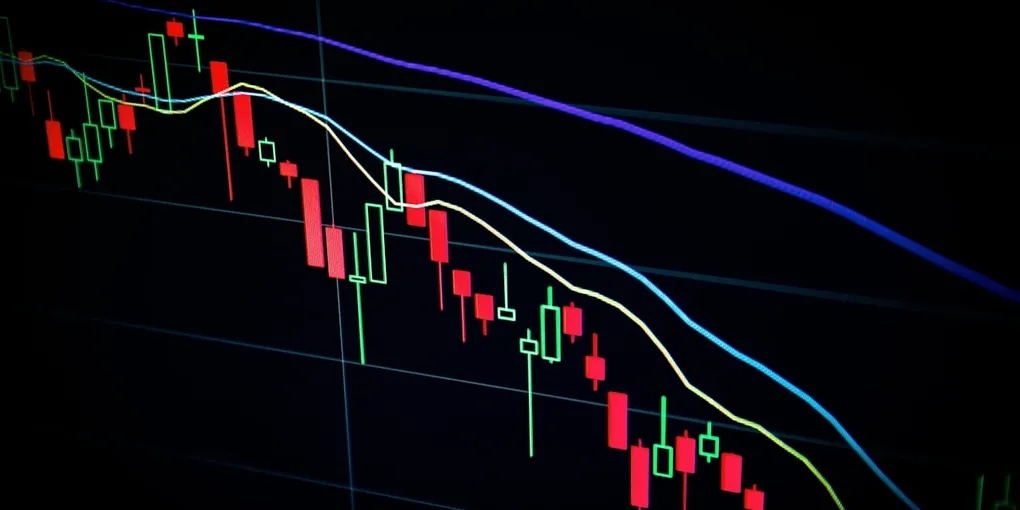
The final stage is the markdown phase, or the crash. Something triggers a shift in sentiment. It might be an economic data point, a geopolitical event, or simply the mathematical reality that prices have detached from underlying value. Once the selling begins, it accelerates. The same herd mentality that drove prices upward now drives them downward with even greater force, because fear is a more powerful motivator than greed. Investors who bought at the top watch their portfolios decline and face an agonizing decision: sell and lock in losses, or hold and endure further pain. Most sell at or near the bottom, completing the wealth transfer back to the disciplined investors who are once again accumulating.
The Neurobiology of Investment Decisions
The reason this cycle repeats is not cultural or educational. It is biological. The human brain evolved to survive on the savanna, not to navigate financial markets. The neural circuits that helped our ancestors avoid predators and find food are the same circuits that govern investment decisions today.
When an investor sees their portfolio decline, the amygdala activates. This is the brain’s threat detection center, responsible for the fight-or-flight response. It does not distinguish between a charging lion and a dropping stock price. The physiological response is similar: increased heart rate, heightened alertness, and an overwhelming urge to act. Selling a falling stock feels like escaping danger, even when the rational analysis suggests holding or buying more.
Conversely, when prices are rising and others are profiting, the brain’s reward system engages. Dopamine floods the prefrontal cortex, creating feelings of pleasure and confidence. This chemical response reinforces the behavior that produced it. The investor who made money buying a rising stock feels rewarded and is biologically predisposed to repeat that behavior. The problem is that by the time the dopamine is flowing, the opportunity may already be over. The reward system is designed to push organisms toward resource acquisition, regardless of whether the current environment makes that acquisition rational.
Research in neuroeconomics has demonstrated that these responses are not minor influences. They are dominant forces. Brain imaging studies show that experienced traders who maintain discipline during volatile markets exhibit different neural activation patterns than novices. Their prefrontal cortex, responsible for executive function and long-term planning, remains engaged even when the amygdala is firing. This is not a personality trait. It is a trained response, developed through experience and deliberate practice.
Cognitive Biases That Shape Markets
Beyond the raw neurobiology, investors are systematically influenced by cognitive biases that distort their perception of risk and reward. These biases are not random errors. They are predictable, consistent, and exploitable by those who understand them.
Loss aversion is perhaps the most consequential. Decades of research, beginning with the work of Daniel Kahneman and Amos Tversky, have shown that the pain of losing a dollar is roughly twice as intense as the pleasure of gaining a dollar. This asymmetry has profound implications for investment behavior. It causes investors to hold losing positions too long, because selling crystallizes the loss and triggers the full emotional pain. It causes them to sell winning positions too early, because taking gains provides relief and removes the anxiety of potentially watching those gains disappear. The result is a portfolio structure that is the exact inverse of what rational analysis would recommend: too many losers, too few winners.
Confirmation bias compounds the problem. Once an investor forms a view about a stock or the market, they naturally seek information that supports that view and dismiss information that contradicts it. In the age of algorithmic social media feeds, this bias is amplified to an extraordinary degree. An investor who believes the market is heading higher will be fed content that reinforces that belief, creating an echo chamber that deepens conviction regardless of underlying reality.
Anchoring is another bias with devastating effects. Investors anchor to specific price points, such as the price they paid for a stock or its all-time high. These anchors have no fundamental significance. The market does not care what price you bought at. Yet investors routinely use their purchase price as a reference point for decision-making, holding stocks that have declined simply because they want to “get back to even” and selling stocks that have risen simply because they have achieved a psychological target.
The availability heuristic leads investors to overweight recent events and vivid stories. A plane crash makes people fear flying, even though driving is statistically far more dangerous. Similarly, a market crash makes investors fear stocks, even though equities have historically been the best-performing asset class over long time horizons. The most recent event feels like the most probable event, and this confusion between availability and probability drives enormous misallocation of capital.
Herd Behavior and the Social Dimension
Investing is often framed as a solitary activity, an individual sitting at a desk analyzing data. But markets are inherently social. Prices emerge from the aggregate behavior of millions of people, and individual behavior is powerfully shaped by the actions of others.
Herding is the tendency to follow the crowd, even when private information suggests a different course of action. It is not simply a matter of ignorance or laziness. Herding is rational in many contexts. If everyone around you is running in one direction, there is probably a reason. The problem is that in financial markets, herding creates self-reinforcing feedback loops that detach prices from fundamentals.
The dot-com bubble of the late 1990s provides a textbook example. As technology stocks surged, investors who remained on the sidelines watched colleagues, friends, and strangers accumulate wealth through IPOs and rapidly appreciating shares. The social pressure to participate was immense. Fund managers who avoided technology stocks underperformed their peers and faced client redemptions. Individual investors felt excluded from a generational opportunity. The decision to buy was not based on valuation analysis. It was based on the unbearable psychological cost of watching others get rich while you stood aside.
The housing bubble of the mid-2000s followed the same pattern. Home prices were rising. Neighbors were refinancing and extracting equity. Television shows glorified real estate speculation. The narrative that “housing never goes down” became so pervasive that questioning it seemed foolish. Yet beneath the surface, lending standards had collapsed, leverage had multiplied, and the mathematical foundation was unsustainable. When the reversal came, it was swift and devastating.
Social media has intensified this dynamic. Platforms like X and Reddit compress the information cycle from days to seconds. A stock recommendation can reach millions of people within minutes. The gamestop phenomenon in 2021 demonstrated how coordinated social behavior, amplified by digital platforms, can move markets in ways that fundamental analysis cannot predict. The price was not driven by earnings or growth prospects. It was driven by collective action, shared narrative, and the intoxicating sense of participating in something larger than oneself.
The Role of Narrative in Market Psychology
Every market cycle is accompanied by a narrative, a story that explains why prices are moving and justifies the prevailing emotional state. These narratives are not incidental. They are essential to the cycle’s progression.
During bull markets, the narrative is always about a new paradigm. The old rules of valuation no longer apply. Something fundamental has changed that justifies higher prices. It might be the internet, artificial intelligence, a new monetary policy framework, or a demographic shift. The specific content varies, but the structure is always the same: prices are higher because the world has changed, and anyone who clings to old metrics is missing the transformation.
During bear markets, the narrative shifts to structural decline. The system is broken. The risks are permanent, not cyclical. Recovery is impossible or will take generations. Again, the specific details vary, but the emotional function is the same: the narrative rationalizes the fear and provides a framework that makes selling feel prudent rather than panicked.
The danger of narratives is that they contain elements of truth. The internet did transform commerce. Artificial intelligence is genuinely revolutionary. Economic crises do cause lasting damage. The error is not in recognizing these truths. The error is in extrapolating them to justify prices that have detached from any reasonable connection to underlying value.
The most successful investors are not those who ignore narratives. They are those who recognize narratives for what they are: stories that serve emotional needs, not analytical frameworks. They listen to narratives to understand the emotional state of the market, but they do not let narratives drive their own decisions.
Building Psychological Resilience
If market cycles are driven by human psychology, and human psychology is biologically wired in predictable ways, the question becomes: how can an investor protect themselves from their own instincts?
The first step is recognition. Understanding that the emotional responses you experience during market volatility are normal, biological, and shared by virtually every other investor is surprisingly liberating. You are not weak because you feel fear during a downturn. You are human. The goal is not to eliminate emotion. It is to recognize it, name it, and prevent it from driving your actions.
The second step is developing a systematic framework for decision-making. This means establishing investment criteria in advance, when emotions are not running high, and committing to those criteria regardless of market conditions. It means writing down the reasons for every investment decision, the expected outcome, and the conditions under which you would change your view. When emotions surge, the written plan serves as an anchor to rationality.
The third step is controlling your information environment. During volatile periods, the instinct to check prices, read news, and seek reassurance is overwhelming. Each interaction with market data triggers another round of emotional response, which triggers another impulse to check again, creating a feedback loop that exhausts judgment and amplifies the likelihood of impulsive action. Successful investors limit their exposure to market noise during periods of stress. They do not watch their portfolios in real-time. They do not refresh financial news sites every hour. They step back, and this distance provides clarity.
The fourth step is understanding your own risk tolerance, not in the abstract, but in the concrete reality of emotional experience. Many investors believe they can tolerate significant portfolio declines until they actually experience them. The gap between theoretical risk tolerance and actual emotional capacity is where most investment mistakes occur. Testing your risk tolerance during calm periods, and adjusting your portfolio so that potential losses fall within your genuine emotional capacity, is one of the most practical things an investor can do.
Historical Lessons That Never Change
The 1929 crash, the 1987 crash, the dot-com bust, the 2008 financial crisis, the pandemic selloff of 2020. Each event was unique in its details. Each event was identical in its psychology. Before every crash, there was a narrative explaining why this time was different. After every crash, there was a narrative explaining why recovery was impossible. Both narratives were wrong.
The investors who survived and thrived through every cycle shared certain characteristics. They had a philosophy, not just a strategy. A strategy tells you what to buy. A philosophy tells you why you are buying it, what you believe about the world, and what principles govern your decisions when the world contradicts your expectations. Investors with a philosophy can distinguish between a temporary setback and a fundamental thesis violation. Investors without one react to every price movement as if it carries existential meaning.
They also understood that patience is not passive. Waiting for the right opportunity, holding through volatility, and resisting the urge to act are active choices that require discipline and conviction. The market rewards patience, but it does not make patience easy. It actively tests it, day after day, with price movements designed to trigger the emotional responses that lead to mistakes.
The Edge Is Emotional, Not Informational
In a world where information is instantly available to everyone, the edge in investing no longer comes from knowing something others do not. It comes from responding differently to the same information that everyone else has.
When bad news hits and prices fall, the emotional response is to sell. The disciplined investor asks whether the news changes the fundamental value of the asset or merely the market’s perception of it. When good news arrives and prices surge, the emotional response is to buy. The disciplined investor asks whether the price already reflects the news and whether the enthusiasm has pushed valuations beyond reason.
This gap between emotional reaction and disciplined analysis is where opportunity lives. It is not a gap that can be closed by reading more research or building more complex models. It is a gap that is closed through self-awareness, emotional discipline, and the willingness to act against the crowd when the crowd is wrong.
The market will continue to cycle between fear and greed. It will continue to create narratives that sound convincing in the moment and ridiculous in hindsight. It will continue to test every investor’s psychological limits. The investors who succeed are not the smartest, the best-educated, or the most connected. They are the ones who understand themselves, who recognize the emotional patterns that drive market behavior, and who have built the discipline to act on reason when everyone else is acting on feeling.