The Trust Economy: Engineering Authenticity in the Age of Synthetic Business
In the shadowed corridors of the global marketplace, a quiet crisis of confidence is unfolding. For decades, the engine of modern business was fueled by a simple, implicit contract: if a brand projected an image of competence and care, the consumer rewarded it with their loyalty. This relationship was mediated by high-gloss advertising campaigns, polished corporate social responsibility reports, and a layer of institutional credibility that seemed unshakable. However, the dawn of the synthetic age has shattered this fragile equilibrium. As artificial intelligence begins to populate our digital world with near-perfect imitations of human creativity, professional expertise, and even emotional resonance, the traditional signals of business legitimacy are failing. We are entering an era where the ability to simulate excellence has become so trivial that excellence itself is no longer sufficient to secure trust. To survive this transition, businesses must undergo a radical evolutionary shift, moving away from the aesthetics of authority and toward a rigorous architecture of verifiable truth.
The modern consumer, once a passive recipient of brand narratives, has become a hyper-vigilant detective. This skepticism is not born of cynicism, but of survival. When a customer can no longer discern whether a review was written by a satisfied neighbor or a sophisticated language model, or whether a strategic insight was derived from years of experience or a statistical prediction, their default reaction is to withdraw. This withdrawal represents a systemic risk to the global economy, as trust is the lubricant that reduces the friction of every transaction. Without it, the cost of doing business spirals upward, requiring more verification, more legal safeguards, and more defensive posturing. The companies that are thriving in this uncertain landscape are not those with the largest marketing budgets, but those that have embraced a new strategic triad: Evidence, Expertise, and Empathy. Together, these three pillars form what forward-thinking analysts are calling the Trust Economy, a paradigm where authenticity is not a feeling, but a measurable and engineered outcome.
The first pillar of this new economy is Evidence, a concept that is being reimagined for a world of deepfakes and automated content. At its core, Evidence is the “Proof-of-Work” for the business world. In the early days of corporate strategy, evidence was often synonymous with static data points such as quarterly earnings, market share, and stock price. While these metrics remain important, they are lagging indicators that offer little insight into the actual health of the relationship between a company and its stakeholders. Today, Evidence has become a dynamic, transparent, and often raw demonstration of the business process itself. It is the move from “telling” to “showing,” and more importantly, “showing the work.”
Consider the rising trend of “building in public,” a strategy that was once the domain of niche software developers but has since migrated into the mainstream of high-growth business. When a founder shares the messy reality of a product failure, or a corporation opens its doors to show the precise origins of its supply chain, they are providing a form of Evidence that cannot be easily synthesized. This level of transparency creates a visceral connection that no polished advertisement can replicate. By exposing the vulnerabilities and the friction inherent in the creative process, a business proves that it is grounded in the physical world. It demonstrates that its successes are not the result of a sanitized algorithm, but of human effort, trial, error, and persistence. This “small proof” acts as a recurring deposit into the bank of credibility, grounding the brand narrative in a verifiable reality that the audience can see, touch, and audit.
This shift toward Evidence represents a fundamental change in the nature of corporate communication. In the past, the goal of a communications department was to curate a perfect, frictionless image. Any sign of internal struggle or logistical failure was hidden behind a vail of professional silence. In the Trust Economy, this silence is now interpreted as a red flag. If a business only shows its highlights, the modern audience assumes that the shadows are being deliberately obscured. Paradoxically, it is the admission of imperfections and the documentation of the journey that build the strongest moats. When a company provides the Evidence of its struggles, it is signaling that it has nothing to hide. It is inviting the customer into the inner circle, changing the relationship from a transactional exchange to a shared voyage. This is the ultimate defense against the synthetic, for while AI can dream of a perfect product, it cannot simulate the shared history of two human entities working through the mud of reality to build something meaningful.
The demand for Evidence also extends to the technical and operational depths of an organization. In sectors like fintech or decentralized finance, Evidence is increasingly delivered through the code itself. “Don’t trust, verify” has moved from a cypherpunk mantra to a core business requirement. When a business can point to an immutable ledger or an open-source protocol to prove its solvency or its adherence to a set of rules, it bypasses the need for institutional intermediaries. This direct, mathematical Evidence provides a foundation of trust that is far more durable than any legal contract or brand promise. As the boundaries between the digital and physical worlds continue to blur, this ability to provide tangible, undeniable proof of action will become the defining characteristic of the most successful enterprises in the world.
While Evidence proves that a business is real, the second pillar, Expertise, proves that it is capable. In the old world, expertise was communicated through credentials and titles. A degree from a prestigious university, a history of working at a blue-chip firm, or a mention in a respected industry publication were the primary currencies of authority. In the Trust Economy, however, these external validation markers are losing their signaling power. We are witnessing a transition from institutional authority to operational truth. This shift is driven by the realization that in a rapidly changing economy, a title from five years ago may have little bearing on a leader’s ability to navigate the challenges of today. Expertise is no longer a static asset that one acquires and holds; it is a live performance that must be continuously demonstrated.
Operational truth is the ability to not just discuss a problem, but to solve it in real-time while others watch. It is the tactical depth that comes from being “in the work.” In the synthetic age, anyone can generate a high-level strategy document or a plausible-sounding analysis of a market trend by using a simple prompt. What is difficult to simulate, however, is the nuanced, granular knowledge that comes from years of hands-on experience and the inevitable scars of failure. The businesses that are winning the battle for Expertise are the ones that have democratized their internal knowledge and shared their tactical playbooks with the world. By teaching their audience how to solve problems, they are not only providing value but are also establishing an undeniable authority that no credential could match.
This pedagogy of business serves a dual purpose. First, it establishes the brand as a leader in its field, a source of truth that others look to for guidance. Second, it creates a “proof of competence” that is irreproducible by those without deep operational roots. When a company shares the specific logic behind a complex decision, including the trade-offs considered and the technical hurdles overcome, they are demonstrating a level of mastery that is visible and verifiable. This is why we seeing a proliferation of deep-dive newsletters, technical podcasts, and open-source documentation from the world’s most innovative firms. They understand that by making their Expertise transparent, they are building a moat of competence that protects them from the noise of the market.
Furthermore, the nature of Expertise is becoming increasingly specialized. In an era of infinite information, generalist knowledge has become a commodity. The real value is now found in the “long tail” of specialized intelligence: the niche insights that only a handful of practitioners globally possess. For a business, this means that the pursuit of being “everything to everyone” is a path toward irrelevance. The most successful organizations are those that lean into their unique technical or creative edges, cultivating a level of expertise so deep and so narrow that it becomes impossible for a competitor, human or artificial, to replicate it. This depth is the ultimate insurance policy. When a customer faces a high-stakes problem, they do not want a generalist solution; they want the specialist who has seen that exact problem a thousand times and knows the silent variables that the average observer would miss.
However, even the most rigorous Evidence and the deepest Expertise can feel cold and mechanical if they are not grounded in the third and final pillar: Empathy. If Evidence is the proof of work and Expertise is the proof of skill, Empathy is the proof of intent. In a world where business interactions are increasingly mediated by screens and algorithms, the human element is being squeezed out. Yet, it is precisely this human element that forms the emotional core of trust. Empathy is the ability of an organization to see through the eyes of its stakeholders, to understand their fears, their aspirations, and their daily struggles on a visceral level. It is the move from a “user-centric” design to a “human-centric” philosophy.
Modern Empathy in business is not about performative kindness or vague marketing slogans. It is about a radical alignment of interests. It is about an organization proving that it truly cares about the outcome for the customer, even when it is not in its immediate financial interest to do so. This level of concern is rare, and because it is rare, it is incredibly valuable. When a business makes a decision that prioritizes the long-term well-being of its community over short-term profit, it is sending a powerful signal of Empathy. It is saying, “We are in this together.” This alignment creates a psychological bond that is more durable than any loyalty program or discount code. It transforms the customer from a source of revenue into a collaborator, a partner who is invested in the success of the organization because they know the organization is invested in them.
The challenge for modern businesses is that Empathy is the hardest of the three pillars to scale. It is easy to write a script for a customer service representative, but it is much harder to empower that representative to listen with genuine care and to solve a problem with actual discretion. As businesses grow, they often optimize for efficiency at the expense of connection. They implement automated systems and standardized processes that strip away the nuance and the warmth of human interaction. In the Trust Economy, this efficiency is a trap. The companies that are succeeding are those that are finding ways to use technology to amplify their Empathy, rather than replace it. They use data not to manipulate, but to anticipate needs. They use automation not to hide from the customer, but to clear the path for more meaningful human engagement.
Empathy also requires a level of vulnerability that many corporate leaders find uncomfortable. It involves acknowledging that the business does not have all the answers and that it needs the help and the feedback of its community to improve. This humility is the antithesis of the traditional corporate mask of invulnerability. Yet, in the synthetic age, invulnerability is a hallmark of the artificial. To be human is to be flawed, to be searching, and to be empathetic. By embracing this humanity, a business creates a resonance that vibrates through its entire ecosystem. It builds a community that is not just satisfied, but belongs.
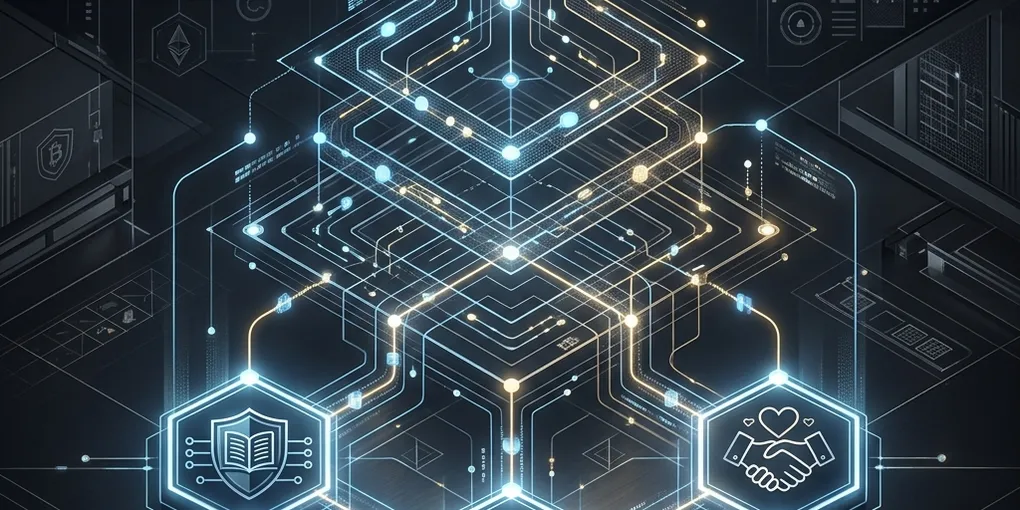
As we look toward the maturity of the Trust Economy, it becomes clear that these three pillars do not exist in isolation. Rather, they form a “Trust Stack,” a layered architecture where each level supports and reinforces the others. You cannot have sustainable Empathy without the Expertise to deliver on your promises, and you cannot have believable Expertise without the Evidence to back it up. The most resilient businesses of the future will be those that engineer this entire stack from the ground up, treating trust as a core technical and operational requirement rather than a secondary marketing output.
Engineering the Trust Stack requires a fundamental change in how we measure business success. We need new metrics that capture the depth and the durability of trust, rather than just the volume of transactions. This might include “Time to Verification,” measuring how quickly a customer can find proof of a business claim, or “Empathy Resonance,” assessing how well an organization’s decisions align with the long-term interests of its community. By quantifying these variables, businesses can move trust from the realm of the intangible into the realm of the actionable. They can invest in trust with the same rigor and the same expectation of return that they currently apply to capital or technology.
The transition to this trust-centric model will not be easy. It requires a level of transparency and a willingness to expose internal processes that many established organizations will find threatening. It demands a move away from the “black box” model of business toward an “open-source” mentality. The incumbents who are steeped in the culture of secrecy and image management will struggle to adapt. They will attempt to simulate trust using the same old tools of high-gloss marketing and artificial polish, only to find that their efforts fall flat in an increasingly discerning marketplace. The shift is not just tactical; it is cultural. It requires a new type of leader, one who prioritizes integrity over optics and who understands that in the long run, the most profitable path is the one that is most honest.
Furthermore, the rise of the Trust Economy will create new opportunities for smaller, more agile players. While massive corporations have the advantage of scale and resources, smaller businesses often have a natural advantage in the pillars of Evidence, Expertise, and Empathy. They are closer to their customers, their operations are more visible, and their founders are often deeply embedded in the work itself. By leaning into these strengths and building their Trust Stacks with intention, these smaller entities can compete with and even disrupt the giants. They can build communities that are so fiercely loyal and so deeply trusting that they become impenetrable to the competitors who only offer a transactional relationship.
Ultimately, the Engineering of Authenticity is a response to the profound technological shifts that are reshaping our world. As AI becomes more capable and more pervasive, the value of everything that can be replicated or simulated will trend toward zero. What remains valuable, and what will become increasingly scarce, are the things that are inherently human: the history of shared struggle, the depth of lived experience, and the capacity for genuine, altruistic care. These are the components of trust that cannot be synthesized. They are the bedrock of the Trust Economy.
The future of business is not one of greater automation or more sophisticated algorithms, although those tools will certainly play a part. The future of business is one of deeper connection and more rigorous truth. The organizations that thrive will be those that recognize that their most valuable asset is not their intellectual property, their physical infrastructure, or even their human capital, but the trust that exists between them and the people they serve. By building a foundation of Evidence, Expertise, and Empathy, these businesses are not just surviving the synthetic age; they are defining it. They are moving beyond the illusion of authority and into the reality of authenticity, creating a more stable, more resilient, and more human global economy for everyone.
In the final analysis, trust is more than just a business strategy. it is the fundamental infrastructure upon which all civilization is built. When trust breaks down, the social and economic fabric begins to unravel. When trust is strong, the possibilities for innovation, collaboration, and collective flourishing are limitless. The challenge for the business world in 2026 is to lead the way in rebuilding this infrastructure, one verifiable action and one empathetic interaction at a time. The result will be a marketplace that is not just more efficient, but more meaningful: a landscape where the value of a business is measured not just by what it produces, but by the integrity with which it operates. This is the promise of the Trust Economy, and it is a future worth engineering.