The Debasement Trade: Hard Assets Replace Fiat
A single ounce of gold now purchases more barrels of oil, more bushels of wheat, and more units of foreign currency than it did five years ago. This is not a speculative anomaly. It is the clearest signal available that the purchasing power of fiat money is eroding at an accelerating pace, and that a growing segment of global capital is rotating toward assets the state cannot print. The movement has a name among institutional investors. They call it the debasement trade, and it is rapidly becoming the dominant portfolio theme of this decade.
The term itself is deceptively simple. A debasement trade is any position structured to profit from or protect against the loss of real value in fiat currency. In its purest form, it means selling claims on paper money and buying things that exist independently of any government’s fiscal discipline. Gold and silver are the most direct expressions of this idea. But the trade extends into commodities, real estate, infrastructure, and select equities that own or produce tangible resources. It is not a bet on inflation, though inflation often accompanies it. It is a bet that the monetary system itself is undergoing a fundamental change, and that assets priced in that system must be revalued upward to reflect the declining trust in the unit of account.
To understand why this trade has gained such momentum, you have to look at the machinery of modern monetary policy. Since the global financial crisis of 2008, central banks in every major developed economy have operated under what economists call fiscal dominance. This is a condition in which monetary policy is effectively subordinated to the financing needs of the government. When a government runs persistent deficits that exceed sustainable levels, the central bank faces a choice. It can resist by raising rates and tightening conditions, which risks a debt crisis and economic contraction. Or it can accommodate by keeping rates low and expanding the money supply, which gradually erodes the currency’s purchasing power. In every major economy since 2008, the central bank has chosen accommodation.
The numbers that result from this choice are staggering. The United States national debt has surpassed thirty-five trillion dollars, with annual deficits now running above two trillion even in years of economic expansion. Japan’s debt to GDP ratio has exceeded two hundred and fifty percent. The European Union, constrained by a more fragmented fiscal architecture, has nonetheless seen its aggregate debt levels rise to levels that would have been considered catastrophic a generation ago. None of these governments show any realistic path to fiscal balance. The political incentives all point in the same direction. Borrowing is painless in the short term. Austerity is painful immediately. And so the borrowing continues, the monetary base expands, and the purchasing power of each unit of currency declines a little more with each cycle.
This is not a new phenomenon. Currencies have been debased for as long as currencies have existed. Roman denarii were gradually reduced from nearly pure silver to base metal as the empire expanded its spending. Spanish gold coins were clipped and shaved as the crown financed its wars. What is different today is the scale and the speed. The technology of modern money creation allows for debasement at a pace that ancient minters could not have imagined. When a central bank creates reserves electronically, it can expand the monetary base by trillions of dollars in a matter of months. There is no physical constraint. There is only the gradual erosion of confidence that follows from each round of creation.
The 1970s provided the last great template for this kind of environment. That decade saw the collapse of the Bretton Woods system, a surge in commodity prices, and a period of prolonged inflation that destroyed the real returns of both stocks and bonds. Gold rose from thirty-five dollars an ounce to nearly eight hundred dollars by the end of the decade. Silver rose even more dramatically. Real assets of all kinds outperformed financial assets by a wide margin. The energy crisis, the breakdown of monetary discipline, and the geopolitical turmoil of the era created conditions that investors today find increasingly familiar.
But the current cycle has features that the 1970s did not. The most important is the sheer accumulation of debt that has occurred in the intervening decades. When inflation struck in the 1970s, global debt levels were a fraction of what they are today. The US debt to GDP ratio was below forty percent. Today it is above one hundred and twenty percent. This changes the calculus for central banks in a fundamental way. Higher interest rates, which were the weapon that eventually broke inflation in the early 1980s, are now far more dangerous because they directly threaten the solvency of the sovereign borrower. A five percent interest rate on a thirty-five trillion dollar national debt represents an annual interest cost of one point seven five trillion dollars, a sum that exceeds discretionary spending on almost everything else. The higher rates go, the more the government must borrow just to service existing debt, which in turn expands the monetary base and accelerates the very debasement that rates were meant to fight.
This trap is what makes the current environment structurally different from earlier cycles. Central banks are constrained in ways they have never been before. They cannot raise rates enough to restore real value to the currency without breaking the fiscal system. And they cannot keep rates too low without fueling the debasement that pushes capital toward hard assets. They are navigating between two incompatible paths, and the path of least resistance, politically and economically, is continued monetary expansion.
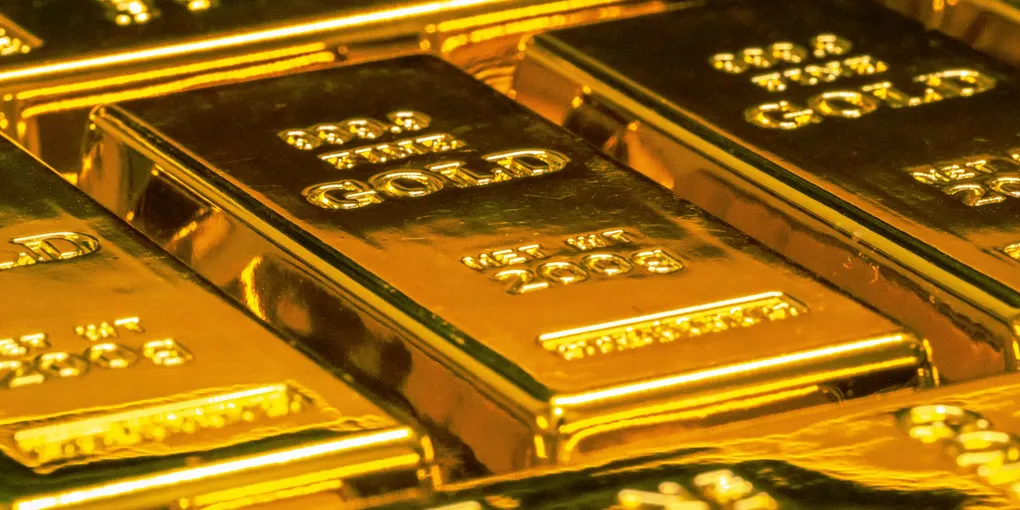
The market is already pricing this in. Gold surpassed five thousand dollars an ounce for the first time in early 2026, a move that most analysts attributed to a single dominant factor: the realization that the debasement of fiat currencies was not a cyclical event but a structural one. The move was not driven by hedge funds or speculators. It was driven by central banks themselves, which have been buying gold at the fastest pace in modern history. The People’s Bank of China, the Reserve Bank of India, the central banks of Poland, Turkey, and Kazakhstan have all been accumulating gold in significant quantities. The motivation is not return. It is insulation. After the freezing of Russian central bank reserves in 2022 demonstrated that foreign exchange holdings could be confiscated or blocked as a geopolitical weapon, every country with significant dollar reserves had to reconsider the safety of those holdings. Gold cannot be frozen. It cannot be sanctioned. It is the only reserve asset that exists entirely outside the global financial payment system.
The implications of this shift extend far beyond central bank balance sheets. When the largest and most conservative institutions in the global financial system begin to rotate out of fiat-based reserves and into hard assets, they are sending a signal that resonates through every layer of the market. Pension funds, sovereign wealth funds, and endowments have followed, increasing their allocations to gold, silver, and commodity-linked strategies. The size of these institutions means that even small shifts in allocation represent enormous flows of capital. A move from one percent to three percent in gold allocation by the world’s pension funds would represent hundreds of billions of dollars in new demand.
Silver occupies a particularly interesting position within the debasement trade. It has the monetary history of gold, having served as currency for thousands of years, but it also has deep industrial applications that gold lacks. Silver is essential to the production of solar panels, electric vehicles, advanced electronics, and military hardware. This dual identity gives it a kind of upside leverage that gold does not possess. When the monetary bid for precious metals rises, silver tends to move more aggressively than gold because its smaller market size means that a given inflow of capital has a larger price impact. And because silver is consumed in industrial applications rather than simply stored, above ground inventories have been declining steadily for years. The combination of shrinking supply, rising industrial demand, and monetary accumulation creates a setup that commodity analysts describe as structurally bullish.
But the debasement trade is not limited to precious metals. It extends across the entire spectrum of real assets. Agricultural land, timber, infrastructure, energy production, and mining equities all benefit from the same underlying dynamic. When the purchasing power of fiat money declines, the nominal price of everything produced from real resources rises. This is not because the resources themselves have become more valuable in real terms. It is because the unit of account used to price them has become less valuable. Investors who understand this distinction are able to position themselves ahead of the broad repricing that follows sustained monetary expansion.
The traditional sixty percent stock and forty percent bond portfolio, which served as the default allocation for a generation of investors, has been one of the most visible casualties of this shift. The strategy relied on a negative correlation between stocks and bonds. When stocks fell, bonds typically rose as investors fled to safety and interest rates declined. This relationship held reliably for decades, but it has broken down in the current environment. When inflation is the primary risk, both stocks and bonds can fall simultaneously, as they did in 2022. A portfolio constructed to deliver stable returns in a regime of falling interest rates is poorly equipped for a regime in which rates are structurally higher and inflation remains persistent. The debasement trade is in many ways a response to this breakdown. Investors who once relied on bonds for protection are now looking to real assets for the same function.
There is an important nuance that distinguishes serious debasement positioning from mere speculation. The goal is not to predict the collapse of the financial system. It is to acknowledge that the gradual erosion of purchasing power is a feature of the current monetary regime, not a bug, and to construct portfolios that preserve real wealth across the range of plausible outcomes. This is why professional allocators tend to size their debasement hedges in a measured way, typically between five and fifteen percent of total portfolio value, rather than going all in. The trade works best as insurance, not as a conviction bet. It is protection against the possibility that the erosion of fiat purchasing power accelerates in ways that catch conventional portfolios off guard.
And there are scenarios in which the debasement trade could fail. A coordinated global effort to restore fiscal discipline, combined with aggressive central bank tightening, could slow or reverse the flow of capital into hard assets. A severe deflationary recession, of the kind that occurred in 2008, could temporarily crush commodity prices as liquidity vanishes from the system. Technological breakthroughs that dramatically increase resource efficiency could reduce the strategic value of physical commodities. These risks are real, and any honest analysis must acknowledge them. But the probability of a sustained reversal in the conditions that drive the debasement trade appears low. The fiscal math that constrains governments is not getting easier. The geopolitical fragmentation that encourages reserve diversification is not abating. And the institutional momentum behind hard asset allocation, once set in motion, tends to be self-reinforcing over multiyear time horizons.
The most insightful framework for understanding the debasement trade comes not from finance but from biology. Ecologists speak of indicator species, organisms whose presence, absence, or behavior provides early warning of changes in an ecosystem. Gold and silver have become the indicator species for the global monetary system. When they rise across all major currencies simultaneously, as they have done throughout 2025 and into 2026, they are signaling that something fundamental has shifted in the environment. The signal is not about gold itself. It is about the system in which gold is priced.
This is a difficult concept for many investors to accept, because it requires thinking about money not as a stable store of value but as a relative price. We are accustomed to treating currency as the fixed point against which all other values are measured. But in a regime of persistent debasement, that assumption becomes dangerous. If the measuring stick is shrinking, everything measured against it will appear to grow. The investor who mistakes nominal price increases for real value creation is making an error that compounds over time. The debasement trade is, at its core, an attempt to avoid this error, to measure wealth in terms of real purchasing power rather than currency units.
The practical implications for portfolio construction are significant. Investors who accept the debasement thesis typically begin by reducing their exposure to long duration bonds, which are the most vulnerable to the erosion of real value. They increase allocations to assets with pricing power, things whose nominal prices rise naturally as the currency weakens. They consider geographic diversification, holding assets in multiple jurisdictions to reduce the risk that any single government’s fiscal failure can destroy their savings. They hold some exposure to assets that exist entirely outside the banking system. These are not exotic strategies. They are conservative responses to an environment in which the traditional tools of portfolio construction have lost some of their effectiveness.
The institutional adoption of this framework is still in its early stages. Most pension funds and endowments still hold the vast majority of their assets in financial claims, stocks and bonds that are ultimately denominated in the same fiat currencies whose value is eroding. But the direction of travel is clear. Every major sovereign wealth fund that has published its recent allocation changes has increased its exposure to real assets. Every central bank that has disclosed its gold purchases has added to its reserves. The trend is not uniform, and it will experience reversals and consolidations, but the structural trajectory is visible to anyone who looks.
What makes the current moment particularly significant is the convergence of multiple reinforcing trends. Fiscal dominance is not easing; it is intensifying as demographic pressures on entitlement spending grow. De-dollarization is accelerating as countries seek alternatives to a dollar-centric reserve system. The breakdown of the traditional stock bond correlation is forcing institutional investors to search for new sources of portfolio resilience. And the cumulative effect of years of monetary expansion has left the real value of many financial assets at levels that depend on continued accommodation. It is a setup that rewards patience and penalizes denial.
The debasement trade does not require a catastrophic outcome to succeed. It requires only that the current trajectory continues, that governments continue to spend more than they collect, that central banks continue to accommodate, and that the purchasing power of fiat currencies continues to decline at a pace that exceeds expectations. History suggests that these conditions are more likely to persist than to reverse. The political economy of democratic governments, with their short time horizons and their aversion to short term pain, consistently favors monetary expansion over fiscal discipline. The incentives have not changed. If anything, they have become more pronounced as debt levels have risen.
There is a reason that gold has maintained its value across thousands of years of human civilization while every fiat currency in history has eventually failed. The discipline required to maintain a currency’s purchasing power is greater than the discipline that democratic governments can sustain. The debasement trade is simply an acknowledgment of this reality, a way of positioning capital to survive the gap between how we wish the monetary system worked and how it actually works. It does not require cynicism about the future. It requires only a clear eyed assessment of the incentives that drive policy and the flows that follow.
The headlines about gold at five thousand dollars may suggest a story about a single asset. But the real story is about everything else, about the erosion of trust in the monetary system and the quiet rotation of global capital toward stores of value that exist outside it. That rotation has barely begun. The debasement trade will define portfolio construction for the remainder of this decade, not because it offers the highest returns, but because it offers the most reliable protection against the risk that most investors are still ignoring.