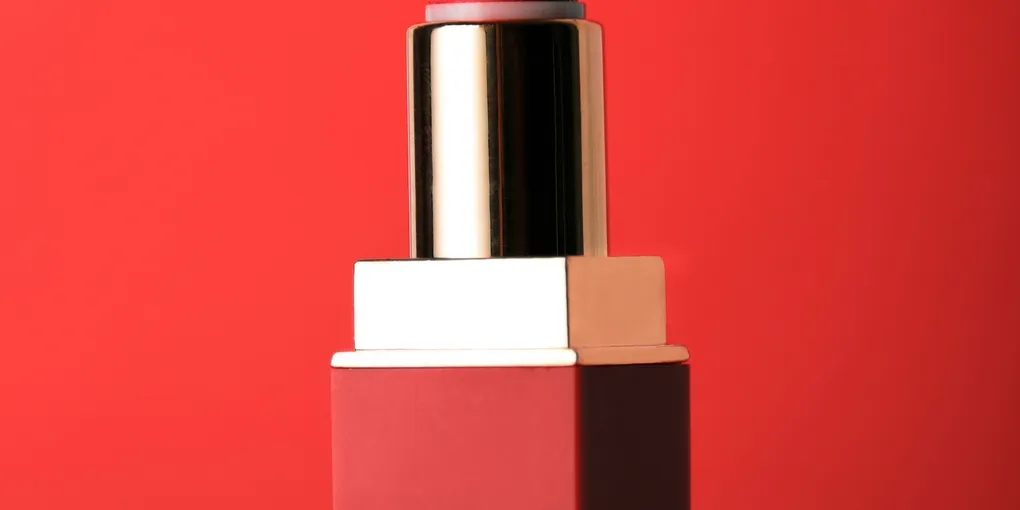
The Lipstick Effect: Why Small Luxuries Boom in Downturns
The Signal in the Makeup Aisle
In the autumn of 2001, while analysts were tearing their hair out over collapsing technology stocks and an economy shaken to its core, the chairman of Estee Lauder noticed something strange happening at the cosmetics counters. Leonard Lauder, who ran one of the largest beauty companies in the world, observed that lipstick sales were climbing sharply even as nearly everything else in retail was falling apart. Women who were cutting back on vacations, clothing, and dinners out were still, apparently, buying lipstick. Lauder gave this pattern a name that would follow him for the rest of his career: the Lipstick Index. The idea was simple and slightly mischievous. When times get hard, people do not stop spending on themselves entirely. They trade down in size but not in spirit, swapping big luxuries for small ones, and the small ones can tell you more about the mood of a country than any consumer confidence survey.
The story has been repeated so often that it risks becoming a piece of financial folklore, a cute anecdote told between market updates. But beneath the folklore sits something genuinely important for anyone trying to understand how consumers behave under pressure and how businesses profit from that behavior. The lipstick effect, and its modern descendant known as treatonomics, reveals a deep truth about the psychology of money. Spending is never only about acquiring things. It is about managing emotion, preserving identity, and reclaiming a sense of control when the larger world feels uncontrollable. That is why, in every economic downturn of the past century, certain categories of small indulgence have behaved less like discretionary purchases and more like necessities.
For investors, business leaders, and anyone curious about why wallets open and close the way they do, the pattern deserves closer attention than it usually receives. It is a window into the household mind during periods of stress, and reading it correctly has real consequences for how we interpret consumer data, evaluate companies, and anticipate which corners of the economy will bend and which will hold.
A Pattern Older Than Its Name
The phenomenon Lauder identified in 2001 long predates his name for it. Historical accounts from the Great Depression suggest that cosmetics sales held up remarkably well through the early 1930s, even as industrial output collapsed and unemployment reached levels that modern economies have never approached. Wartime America in the 1940s treated makeup as something close to a morale essential, sparing cosmetics from many of the restrictions applied to other consumer goods on the theory that a tube of lipstick was cheap insurance for the national mood. Economists studying later downturns found versions of the same pattern. During the severe recession that began in 2008, market researchers recorded growth in makeup sales across multiple quarters even as overall consumer spending contracted, and academic work by economists Hye Kyung MacDonald and Yesola Dildar found that younger women increased their spending on cosmetics during those years even as they cut back sharply on clothing.
What makes these episodes interesting is not merely that some category always grows somewhere. Every recession produces odd statistical artifacts. What makes the lipstick pattern durable is that it recurs across decades, across countries, and across product categories that share a specific psychological profile. The items that boom in bad times are affordable, personal, and emotionally loaded. They are purchases made for oneself rather than for practical necessity, and they are small enough to escape serious deliberation. Lipstick is simply the most poetic member of a family that now includes specialty coffee, premium chocolate, nail care, scented candles, energy drinks, video game add-ons, and, according to a growing body of survey evidence, an ever expanding list of modest daily pleasures that consumers describe as their little treats.
Researchers debate how strong the effect really is and how reliably it appears in any given downturn, and skeptics rightly point out that lipstick sales have sometimes fallen during recessions too. But the underlying behavior, the substitution of accessible indulgence for expensive indulgence when budgets tighten, shows up with such consistency that few consumer psychologists dispute its existence. The argument is about magnitude and mechanism, not reality.
The Mood Repair Economy
To understand why a person facing genuine financial anxiety would spend money on something as seemingly frivolous as lipstick or a five dollar latte, it helps to start with what psychologists have learned about the relationship between mood and purchasing. In a series of influential studies, marketing researchers Selin Atalay and Margaret Meloy examined what people actually buy when they feel bad. Their finding was striking. People in low moods gravitate toward small, unplanned purchases, and far from producing the guilt and regret that conventional wisdom predicts, these purchases genuinely improved mood, sometimes measurably and lastingly. The participants did not report feeling foolish afterward. They reported feeling better.
This is the mechanism that economists and psychologists call compensatory consumption, the practice of using acquisition to repair an internal state. When a large source of stress cannot be solved, the job promotion that did not come, the housing market that will not cooperate, the retirement account that keeps shrinking, the mind seeks smaller problems it can solve completely. A purchase is one of the few acts in modern life that offers immediate, unambiguous completion. You want something, you buy it, the transaction closes, and for a moment the world behaves exactly as expected. Researchers who study self regulation note that this sense of agency, the feeling that one’s actions produce predictable results, is precisely what economic uncertainty strips away. Small purchases restore it at a price almost anyone can afford.
There is also a quieter force at work, one that behavioral scientists describe as mood repair through anticipation. The pleasure of a small luxury begins before it is used. The coffee is savored in the minutes before it is drunk, the new candle in the days before it is lit, the lipstick in the hours before it is worn. Anticipation stretches a single purchase into a renewable emotional resource, which may explain why the treats people choose under stress are so often consumable or repeatable rather than durable. Nobody repairs a bad week with a washing machine. They repair it with things that run out and must be bought again.
The Six Dollar Escape
The second pillar of the psychology is a quirk of financial cognition that Richard Thaler, the economist whose work on mental accounting helped earn him a Nobel Prize, documented over decades: people do not treat money as perfectly fungible. Instead, they sort it into invisible mental accounts, each with its own budget, its own rules, and its own threshold of scrutiny. A six thousand dollar vacation triggers weeks of deliberation, spreadsheet comparisons, and family negotiation. A six dollar coffee triggers nothing at all. The two amounts differ by three orders of magnitude, yet they often pass through entirely different mental checkpoints.
Mental accounting explains why small indulgences are the last expenses households abandon and the first they restore. Because each individual treat falls below the threshold of conscious budgeting, it remains invisible to the cost cutting process even as larger cuts are made all around it. Surveys conducted in the mid 2020s suggest that a majority of consumers deliberately cap their small treat spending at a level designed to keep the guilt away, a practice so widespread that marketing writers coined the term treatonomics to describe it. People are not oblivious to the absurdity of skipping a vacation while keeping the latte. They are managing two separate ledgers, and the ledger that holds the latte is, by design, never audited.
Self signaling adds another layer. Behavioral researchers have found that purchases function as messages to oneself about who one is and how one is doing. In hard times, when larger identity projects like career advancement or homeownership stall, a small luxury becomes proof that one has not given up, that standards are being maintained, that the person inside the struggling budget is still someone who deserves nice things. Psychologists who study scarcity note that this is not irrationality. It is maintenance of the self under adverse conditions, and the cost of that maintenance is trivial compared to the alternatives people could choose.
Mirrors, Status, and Hard Times
The most debated corner of this research concerns appearance specifically. Why has lipstick, of all products, been the recurring symbol? One line of thinking, associated with evolutionary psychologist Sarah Hill and her colleagues, holds that economic insecurity heightens the importance of presenting oneself well, because difficult environments intensify competition for resources and partners. In experiments, simply exposing women to cues of economic recession increased their desire for appearance enhancing products, suggesting that the impulse is triggered by the environment itself rather than by actual changes in spending power. Related work by Ekaterina Netchaeva and Maryam Kouchaki’s collaborators, including research by Netchaeva and Rees, found that women facing greater economic concern were especially likely to prioritize a polished professional appearance, treating grooming as strategic equipment for a labor market that had turned hostile.
Other researchers prefer a simpler explanation rooted in social presentation rather than evolutionary logic. Job markets tighten in recessions, competition for visible opportunities intensifies, and looking composed becomes a form of professional armor. There is also the matter of substitution: when the budget no longer allows a new coat or a holiday abroad, cosmetics become the accessible frontier of self investment, the cheapest available upgrade to one’s public self. Analysts suggest the truth likely combines all of these forces, and there is ongoing debate about their relative weight. What matters for our purposes is that the spending is functional in the eyes of the spender. It does work, whether that work is emotional repair, professional positioning, or the quiet defense of dignity.
Status economics completes the picture. Human beings signal position through consumption, and when the expensive signals become unaffordable, the signaling does not stop. It migrates downward into whatever the budget can carry. This is why downturns so often produce booms in accessible markers of taste: the right coffee order, the cult skincare product, the designer fragrance in travel size. The desire to be seen as doing well survives the inability to buy the traditional evidence of it, and businesses that understand this migration can serve the need at almost any price point.
From Lipstick to Little Treats
Every generation reinvents the pattern in the image of its own economy, and the current version is instructive. When the pandemic arrived in 2020, it delivered a cruel joke to the original index: masks covered exactly the half of the face where lipstick lives, and lipstick sales collapsed. Yet the underlying psychology did not disappear. It relocated. Eye makeup surged as the visible canvas shrank, nail care boomed as salons closed and home manicure kits flew off shelves, and fragrance found new life as a private pleasure in a year without public occasions. The category shifted; the behavior held. Observers who declared the Lipstick Index dead in 2020 had mistaken the symbol for the mechanism.
By the mid 2020s the mechanism had acquired its own vocabulary. Little treat culture became a recognizable phrase describing the deliberate rationing of small pleasures, the pastry after a difficult meeting, the premium iced coffee as a commute companion, the modest online purchase that marks the end of a hard week. Survey work suggests that most adults now indulge in at least one such treat monthly and that many structure their entire emotional budget around them. Meanwhile, the broader retail landscape split into what industry analysts call a barbell: growth concentrating at the premium end, where affluent buyers pay for products that justify themselves, and at the value end, where everyone else hunts for affordable versions of the same satisfactions. One major retail analysis projected that in 2026 affluent households would account for more global consumer spending than the vastly larger middle market, a statistic that captures how thoroughly the middle has learned to trade both directions at once.
The dupe phenomenon belongs squarely in this story. Dupes, inexpensive imitations of prestige products, exploded into mainstream commerce during the inflation years, celebrated openly on social media rather than hidden in embarrassment. Their rise is the lipstick effect wearing a new outfit. Consumers refused to surrender the experience of beauty and style; they simply demanded it at a price their strained budgets could carry. Companies that grasped this early, building entire strategies around delivering prestige adjacent experiences at drugstore prices, posted growth streaks through the worst inflation in four decades while legacy brands that relied on prestige pricing alone watched customers hesitate.
The Business of Affordable Indulgence
From the corporate side, the small luxury is one of the most attractive products in commerce, and the reasons are structural rather than mysterious. A product that provides emotional repair at a trivial price enjoys extraordinary pricing headroom, because the purchase decision is governed by mood rather than by comparison shopping. Nobody cross references the price of comfort per ounce across three retailers. The transaction is small enough to bypass analysis, frequent enough to compound into serious revenue, and resilient enough to survive recessions that gut larger categories. These are the ingredients of what investors prize as pricing power, and history suggests the companies that hold it in the treat economy tend to keep it.
Starbucks built an empire on precisely this insight long before the word treatonomics existed. Howard Schultz described the company explicitly as an affordable luxury, a third place between home and work where a few dollars purchased not just coffee but a brief, reliable sense of being a person who has their life together. The formula proved remarkably recession resistant, and countless businesses have borrowed it since, from premium chocolate makers whose sales barely flinch in downturns to energy drink brands that turned a caffeine delivery system into a daily ritual with tribal loyalty. Beauty companies occupy the same territory at scale. E.l.f. Beauty rode years of consecutive growth through the inflation surge by selling dupes at prices that felt immune to macroeconomic news, while Estee Lauder, L’Oreal, and their peers have long understood that the beauty aisle behaves differently in storms than the apparel rack next door.
The pattern extends beyond physical goods. Small digital purchases, the cosmetic skin in a video game, the extra feature unlocked for a few dollars, the monthly subscription treated as a minor utility, replicate the psychology exactly: low individual cost, high emotional yield, invisible in aggregate until the statement arrives. Savvy operators across industries have converged on the same design principle. Make the product small enough to escape scrutiny and meaningful enough to matter, then let the customer’s need for mood maintenance do the selling.
What Investors Should See in the Mirror
For investors, the lipstick effect functions best as a lens rather than a timing tool, and the distinction matters. Treating lipstick sales as a market signal, buying stocks when lipstick rises and selling when it falls, has never survived rigorous testing. The index is loose, the categories shift, and the correlation with anything tradable is weak enough that analysts broadly agree it should not drive decisions by itself. But as a reading of household psychology, the pattern is genuinely informative, because the health of the treat economy tells you something that headline retail numbers obscure: how much strain ordinary budgets are under and how households are choosing to cope.
Strong small luxury spending during a broad slowdown is double edged. On one hand, it identifies the businesses positioned to prosper, the affordable indulgence providers, the value oriented beauty and snack and beverage companies, the platforms that sell small digital comforts. Consumer staples with treat characteristics have historically defended earnings in recessions far better than discretionary categories, and dividend investors have long favored them for exactly that reason. On the other hand, booming treat sales alongside collapsing big ticket sales is itself a symptom, evidence that households feel squeezed enough to abandon major purchases but not deprived enough to abandon small comforts. An economy where the latte outlives the vacation is an economy waiting for either relief or reckoning, and knowing which dynamic you are observing changes how you read every other number.
The barbell adds a final refinement. Industry projections showing affluent spending overtaking the middle market suggest that the treat economy is stratifying. At the top, luxury houses sell scarcity to buyers untouched by mortgage rates. At the bottom, dupes and private labels sell dignity at scale. The vulnerable position is the middle, the brand that is neither clearly worth a premium nor cheap enough to win the trade down, and investors evaluating consumer companies might ask the question that retail analysts now consider central: when a shopper stands in the aisle deciding, does this product earn its place in the basket, or is it about to be optimized away?
When the Treat Stops Working
An honest account of the psychology must also acknowledge its shadow. The same mechanisms that make a small purchase restorative can make it compulsive, and marketers know it. An entire commercial discipline now exists to engineer the treat moment, to place temptation at the checkout, to time notifications for moments of low resolve, to wrap subscriptions in frictionless billing so that the mental ledger never gets audited. Buy now, pay later services have extended the logic to its strangest conclusion, splitting even the smallest indulgence into installments and thereby dissolving the last natural checkpoint on impulse spending. When the six dollar escape requires a payment plan, the repair mechanism has clearly inverted into something else.
Behavioral researchers distinguish between deliberate indulgence and engineered indulgence, and the difference lies in authorship. The test is uncomfortable but clarifying: did you choose the treat, or did the treat arrange to be chosen by you? Occasional, intentional small pleasures remain one of the more humane ways people get through hard seasons, and the research on mood repair supports their value. The goal is not austerity. It is awareness, keeping the audit of the little ledger occasional rather than never, so that the purchases that promise control do not quietly take it.
The View From the Counter
Strip away the catchy name and the lipstick effect turns out to be a study in how people protect their inner lives during outer difficulties. Markets measure spending in aggregates, but spending happens one small decision at a time, in checkout lines and browser tabs, made by people balancing fear against the need to feel whole. The persistence of the pattern across a century of economic history says something steady about human nature: that morale is a real economic input, that dignity has a price point, and that the smallest purchases often carry the heaviest meaning.
For the investor, the lesson is to read the small numbers closely, because they whisper what the large ones conceal. For the business leader, it is to respect the emotional work a product performs, since that work, not the specification sheet, is what customers are actually buying. And for everyone else, it is simply to notice the next little treat for what it is: a tiny act of self preservation, purchased at a discount, in a world that rarely offers control at any price.