The Psychology of Bureaucracy: Why Companies Slow Down
The Maze That Never Closes
Somewhere in a global corporation, on an ordinary Tuesday, a decision worth roughly two million dollars has been waiting in a series of inboxes for eleven days. It is not a difficult decision. The project is approved, the budget exists, the customer is waiting. The decision requires only a signature, and the signature requires another signature, and before any of that, the paperwork must be formatted, verified, filed, and resent three times because the first version carried the wrong revision date. Nobody involved is lazy. Everybody involved is busy, and that is precisely the paradox. A remarkable amount of human effort is being poured into preventing a human being from simply deciding something.
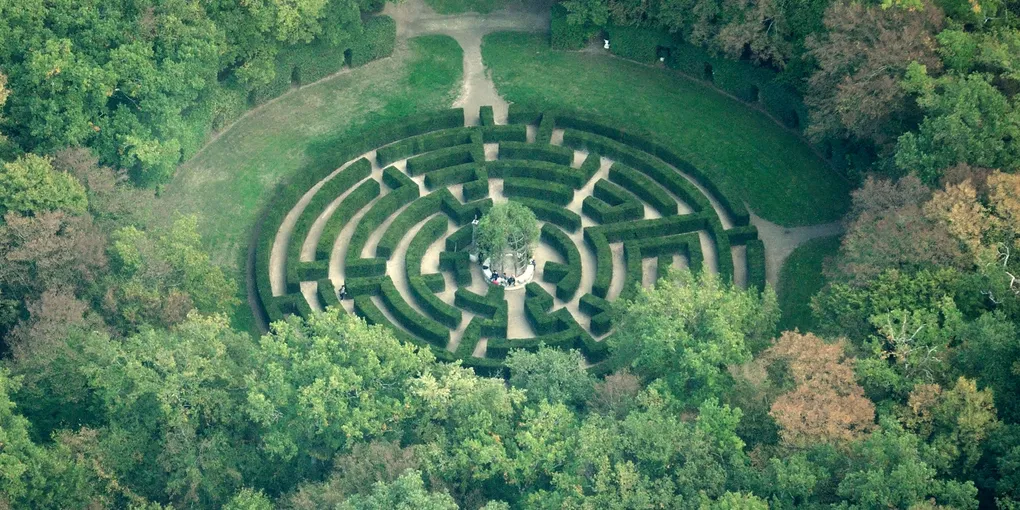
This is how every bureaucracy begins to look from inside: a maze where the walls are procedures and the exit is just over there, visible, obvious, and unreachable. The word itself comes from the French bureau, the desk, and the green cloth that once covered it, an etymology that captures the moment when organized work stopped happening in the open and started happening behind furniture. By the early twentieth century, when the sociologist Max Weber studied the phenomenon, the desk and paper world had become something far more profound. Weber called bureaucracy the most rational form of organization humanity had ever invented, and he was right. He also warned, in a phrase that would haunt management theory for a century, that this rationality could become an iron cage, a structure of rules and roles so complete that it eventually imprisoned the very purpose it was built to serve.
The irony is that the cage is built by reasonable people doing reasonable things. No company ever sets out to become bureaucratic. The maze is assembled one approval step at a time, one form at a time, one meeting that could have been an email at a time, each addition justified at the moment it is made. Yet the cumulative result is a mechanism that slows everything, hides accountability, wastes capital, and drives away the talented people who could least afford to be driven away. Understanding the psychology of this process, why intelligent organizations relentlessly build structures that make them slower and dumber, is one of the most valuable lenses available to anyone who invests in businesses. Because bureaucracy is not simply an irritation. It is a tax, levied on the future earnings of every company that carries it, and it is one of the few taxes that investors can learn to see coming years before it appears on any income statement.
The Rational Machine and Its Human Cost
Bureaucracy was not always a disease. It was, in its time, a spectacular cure. Before the invention of the modern administrative organization, businesses were small enough to run on personal trust. The merchant knew every partner, every voyage, every ledger entry by hand. But the industrial age changed the scale of everything. A railroad spanning a continent, a bank with branches in a dozen cities, a manufacturing enterprise employing thousands of workers, none of these could be run on the memory of one person. Weber catalogued the solution with genuine admiration. Written rules, defined roles, hierarchies of authority, files that preserved decisions beyond the lifespan of the people who made them. This machinery made possible the global economy, the modern corporation, the mass production of everything from steel to insurance policies.
The psychology of this machinery was genuinely liberating at the outset. Rules replaced the arbitrary whims of bosses. Written documentation meant that a worker who had the right of it on paper could defend it against a manager who had the wrong of it in memory. Standardized procedure promised fairness, predictability, and a guarantee that the same situation would be handled the same way whether it arose in Boston or Bombay. These are real achievements, and the organizations that abandoned them entirely, preferring instinct and improvisation at scale, almost always fell apart. The question was never whether to have rules. The question was how many rules, and what those rules would do to the people who lived inside them.
The answer began to emerge in the middle decades of the twentieth century. In the 1940s, the sociologist Robert Merton described what he called the bureaucratic personality, the tendency of people who spend their lives administering rules to eventually worship the rules instead of the purposes they serve. The conscientious clerk who refuses to help a customer because a form is missing a box is not being malicious. She is being loyal to the system, and the system has trained her to measure her worth by the completeness of her compliance rather than by the outcome of her work. Merton pointed out that this is not a flaw in individuals. It is a predictable consequence of institutional design. When an organization rewards rule-following and punishes rule-breaking, regardless of results, it will eventually fill itself with people who follow rules beautifully and accomplish remarkably little.
This insight had a corollary that would shape every later theory of organizational decline. The people best at navigating a bureaucracy are not necessarily the people best at creating value. In fact, the skills that make someone excellent at working a system, patience, attention to detail, mastery of unwritten protocols, a talent for being noticed doing the right things, are often quite different from the skills that make someone excellent at serving customers, inventing products, or making judgment calls under uncertainty. The result is a slow but relentless selection pressure. The bureaucratic personality rises, the decisive personalities leave or grow cynical, and the organization’s culture quietly migrates from achievement to administration. Nobody declares this migration. It simply happens, one hiring decision and one performance rating at a time.
The Tyranny of Size and the Need for Order
Part of what drives this migration is that corporations genuinely need structure, and the need grows with scale in ways that are not linear. Anthropologists and organization theorists have long noted that human groups can coordinate informally up to roughly a hundred and fifty people, the figure often called the Dunbar number, after which the brain’s capacity to maintain social relationships is exhausted and some formal scaffolding becomes necessary. A growing company crosses that threshold and encounters a genuine crisis of coordination. Knowing who knows what, who decides what, and who is accountable for what can no longer rely on memory. The first layer of rules appears, and it is, at that moment, entirely rational.
Here the psychology becomes interesting, because the response to coordination failure is rarely calibrated. Managers who have been burned by a miscommunication do not add the minimum structure required to prevent that specific miscommunication. They add the maximum structure they can justify, because structure feels like safety. And the feeling is the point. Rules are anxiety management as much as they are operational design. The manager who can point to an approved process, a signed document, a chain of accountability covering every conceivable eventuality, has traded personal judgment for institutional cover. In the short term this feels wonderful. In the long term it steadily amputates the organization’s ability to respond to anything the process did not anticipate, which is to say, its ability to respond to reality.
The other driver is loss aversion, the deeply human tendency to weigh losses roughly twice as heavily as gains. For a leader, the asymmetry between the cost of approving something that fails and the cost of delaying something that succeeds is brutal. Approve a bad project and your name is attached to a visible loss. Delay, or silently obstruct, a good project and the loss is diffuse, shared, slow, and very often invisible. The rational response of an individual career is therefore to say no, or more precisely, to say nothing and require another signature. Every additional approval layer spreads responsibility so thinly that no single person is ever at fault, which is the institutional version of the bystander effect, the well-documented finding that the more witnesses a crisis has, the less likely any of them is to act. A decision that is everyone’s responsibility eventually becomes nobody’s.
Why Smart People Build a Slower Machine
The most puzzling thing about bureaucracy is that it continues to grow even when the people building it are intelligent, experienced, and genuinely committed to the company’s success. This is the point at which the phenomenon becomes strangest. The growth of rules is driven by the same mental machinery that drives the growth of any belief in the face of disconfirming evidence, and it follows a logic that social scientists have spent decades mapping.
First comes the hindsight loop. When a failure occurs, a product launch that missed, a compliance gap that cost money, a bad hire that slipped through, the organization responds with a review, and nearly every review concludes with recommendations for more process. More gates, more approvals, more checks, more documentation. The failure is interpreted as evidence that the system did not have enough rules, when in fact it may simply be the unavoidable noise of a complex system operating in an uncertain world. This is the same pattern that transformed medical research oversight into what investigators now describe as a straightjacket: a review process created to prevent harm, tightened after every subsequent catastrophe, until it strangled the very research it was meant to protect. A single patient death in a clinical trial at an American university in the late 1990s set off a chain of regulatory tightening whose costs, which researchers have estimated in the billions of dollars annually, fall almost entirely on the science that never got done. In business the pattern is identical. Every failure begets a new safeguard, every safeguard begets new exceptions, and every exception begets a new rule.
Second comes empire building. In his 1967 study Inside Bureaucracy, the economist Anthony Downs described the lifecycle of organizations with cold precision. Early companies and agencies are lean, flexible, mission driven, and staffed by people who believe in the work. As they prove themselves, they grow, and growth brings formalized procedure, specialized subunits, and hardened jurisdictional boundaries. Then comes the mature phase, in which the real goals, budget maximization and turf protection, gradually replace the original mission. Departments guard their headcount because headcount is status. Managers add staff because staff make them more important. The organization’s internal politics, who controls which budget, who reports to whom, who can block whom, become a parallel economy that consumes enormous energy while producing nothing for the customer. Downs was writing with governments in mind, but he explicitly recognized that the same pathology infects private corporations, with one important difference. Markets eventually punish the disease, whereas governments can carry it for decades. The punishment arrives later, but when it arrives, it tends to arrive all at once.
Third comes the substitution of process for purpose, which the founder of Amazon described more memorably than any academic ever managed. In his 2016 letter to shareholders, Jeff Bezos warned that as organizations grow they risk falling into the trap of process as proxy. Good process serves you so you can serve customers, he argued, but if you are not watchful, the process can become the thing. This is the deepest defense of bureaucracy’s psychological appeal. Process is measurable, auditable, and defensible. Purpose is vague. When an organization becomes anxious, it naturally retreats toward the measurable and the defensible, and it presents that retreat as rigor. Decisions that were once made by asking what helps the customer, or what creates the most value over the long term, become decisions made by asking whether they fit the approved framework, which always, inevitably, means the framework of the last successful era.
The Price of the Maze
It would be convenient if bureaucracy were merely annoying, a matter of frustrating meetings and bloated expense reports. The research suggests it is something far more costly. In the most famous attempt to measure the problem, the management scholars Gary Hamel and Michele Zanini built something they called the Bureaucracy Mass Index, a machine designed to estimate the drag that administrative overhead imposes on large organizations. Their findings were bleak. The average large American company, they estimated, loses roughly ten percent of its output to bureaucratic drag, a figure that compounds into hundreds of billions of dollars across the economy. Even more tellingly, they documented that the share of workers employed in coordination roles, managers, administrators, analysts, and people whose primary job is producing information for other people, has risen for decades, all while organizations have grown slower at exactly the tasks coordination was meant to accelerate.
These figures capture only the direct cost. The indirect costs are far more destructive to long-term value. Bureaucracy repels talent. The people most capable of creating value are also the people least willing to spend their careers fighting approval chains, which means the organizations that become bureaucratic do not merely lose efficiency. They lose the very people who could have unclogged them, and they broadcast a quiet message to everyone who remains that initiative is risky and conformity is safe. The behavioral research here is consistent. When people are given rules for everything, they stop exercising judgment, not because judgment has been banned but because it has been made irrelevant. Creativity declines, ownership declines, and organizations discover that they have become enormous and slow at exactly the moment the market rewarded speed.
The compounding nature of this cost is what makes it so dangerous. A bureaucracy does not stand still. A lean company of a thousand people can decide something in an afternoon. A bureaucratic company of the same size takes six weeks and a committee. The six-week version does not just lose the thirty-nine days. It loses the project, because the customer who needed the answer did not wait. Each lost project removes revenue and enthusiasm, and each reduction in enthusiasm raises the anxiety that produced more process in the first place. The maze deepens because the people inside it, seeing the path close ahead of them, cling harder to the walls. This is why bureaucratic decline is so often invisible until it is terminal. The financial statements remain plausible long after the organization has lost the ability to respond to anything that was not already in the plan.
Reading the Maze From the Outside
For an investor, all of this is far more than a management curiosity, because bureaucracy is a leading indicator that can be observed years before it destroys a company’s numbers. The stories that make this legible are abundant. Consider General Electric in the 1980s. The company had become a vast, layered operation famous for its policy manuals, its budgeting rigor, and its committee-driven decision culture. Its new chief executive, Jack Welch, openly declared bureaucracy the enemy, described it relentlessly as a disease, dismantled layers of management, and built a program called Work-Out through which employees could challenge pointless process in front of their bosses. The corporation that emerged was not only leaner. Over the following two decades it added hundreds of billions of dollars in shareholder value, a feat that was, for a long time, unequaled in American corporate history. The contrast illustrated something management theory had suspected for generations. Removing bureaucratic drag is not a cost-saving exercise. It is a return of the organization to itself.
The counterexamples are just as instructive. Companies that obsess over procedure tend to announce their weakness through signals that are legible from public documents. Rising selling, general, and administrative expense as a share of revenue. Headcount growing faster than output. A proliferation of executive titles. Endless committees announced with pride in annual reports. A vocabulary dense with cross-functional task forces and governance frameworks. Each signal is individually banal. Taken together, they describe a company whose energy is migrating inward. Historical trends indicate that the stock market is notoriously slow to price this migration, which is precisely why it matters. The perfect time to notice a company becoming bureaucratic is while its results are still good, because by the time bureaucracy shows up in earnings as declining margins, lost market share, or a botched transition, the exit has been closing for years.
The most successful investors of the modern era have essentially built their fortune on refusing to own maze-bound companies. The great value investors of the twentieth century, from Benjamin Graham to Warren Buffett, shared a preference for businesses they described in remarkably simple terms: understandable products, low complexity, minimal restructuring, steady leadership. Beneath that financial vocabulary they were really describing an instinct for spotting bureaucracy. A company that requires five corporate layers to make an acquisition, that has been reorganized six times in ten years, that spends more on consultants than on research, is telling you something about its future whether its current quarter is good or not. The psychology of the maze is visible long before the economics of the maze become visible.
Keeping the Exit Visible
If bureaucracy is a tax, the question that naturally follows is whether the tax can be avoided. The answer, from the organizations that have genuinely resisted it, is that it can be held at bay, but only with the same sustained, watchful effort that a culture of fitness requires. There is no one-time fix. There is, however, a recognizable discipline.
The first element of that discipline is measurement. Bureaucracy survives wherever its cost is invisible. Companies that stay lean tend to treat overhead the way they treat inventory, as a cost that must justify itself continuously rather than once. The most effective practitioners borrow a version of the sunset clause, the requirement that a rule or a department demonstrate its value or expire. Some of the leanest operations on earth run on a one-in, one-out principle for procedures: every new policy must be matched by the retirement of an old one, forcing the organization to confront constantly whether its accumulated machinery actually earns its keep. This does not eliminate rules. It eliminates the presumption, which descends over every organization that stops watching, that existing rules are immune to challenge because they exist.
The second element is the deliberate protection of judgment. The companies that stay fast give real decision rights to people close to the customer and the work, and they train those people to use judgment rather than to wait for clearance. This is the philosophy behind the small team structures Amazon famously built, two-pizza teams small enough to feed with two pizzas, and the single-threaded leadership that attaches one accountable owner to each important problem. It is also the philosophy behind the principle that decisions should be made by the people doing the work, at the last responsible moment, rather than escalated upward until a committee can be convened. The psychology here is counterintuitive but crucial. Judgment is not a skill that degrades when exercised. It is a muscle that atrophies when unused, and the organization that stops asking its people to decide, because the process has decided for them, slowly loses the only capacity that makes it capable of anything at all.
The third element is culture, and culture is where the psychology of bureaucracy is finally won or lost. Human beings will tolerate astonishing amounts of process when they believe it serves a shared mission, and they will rebel against a single pointless form when they believe it serves nobody but itself. This is why the founders of the great frugal, fast, compounding companies spend so much of their time telling stories. The stories are not decoration. They are the mechanism through which purpose is kept alive against the gravity of process. An organization that can explain, in one sentence, why it exists and what it will not do, has given its people the anchor that makes any maze navigable. An organization that cannot name its purpose, because it has become a museum of every purpose it ever had, has already decided, in the most human way possible, to keep building walls.
The Last Walk Through
Bureaucracy, in the end, is not a failure of management or a conspiracy of mediocrity. It is a human response to uncertainty, a way of buying safety with speed, of trading responsiveness for the illusion of control. The psychology that builds it, the loss aversion of the individual career, the anxiety of the manager, the comfort of the rule, the quiet empire of the department, is not exotic or evil. It is the same ordinary human machinery that builds families, armies, religions, and markets. The distinction that matters is not between organizations with rules and organizations without them. It is between organizations that remember the rules are a means and organizations that forget.
For the investor, this is one of the most reliable edges available in a world that studies balance sheets while ignoring the mind that produces them. The company that keeps its maze small is not merely saving money. It is preserving speed, judgment, talent, and the capacity to adapt, which are the true raw materials of compounding value. The company that lets its maze grow is mortgaging all of it, slowly and politely, to buy the appearance of order. Both companies look the same for a long time. One of them is quietly becoming the future the other one used to have. The maze does not hide its exits from those who look. It only hides them from those who have stopped walking.